
How Resistance to Energy Flow Shapes Life
The Science Behind the Energy Resistance Principle (ERP)


ENERGY SCIENCE
Full-Text Link to Primary Source
Some days, everything feels effortless. Other days, even simple things feel heavy. We often explain this in psychological terms. But there may be a deeper, physical reason: how easily energy flows through the body.
A new principle bridging physics and biology suggests that everything about us arises from energy flow encountering resistance. Energy resistance may be one of the most fundamental forces shaping life.
To understand our human nature, we must understand what moves our bodies and minds.
Reframing Life Beyond Molecules
In the molecular story of life, biology unfolds as a series of collisions: one molecule bumps into another, binds, reacts, and releases. This mechanistic lens has been extraordinarily powerful. It gave us genetics, the mapping of the human genome, the discovery of enzymes and receptors, and an entire pharmacological universe built around molecular interactions. It also enabled us to engineer life itself, from gene editing to molecular diagnostics, at the level of DNA and protein.
But it leaves an important question unanswered.
What drives these interactions? What determines when and how they occur, and how they scale from chemistry to physiology, from cells to whole organisms?
The molecular view tells us what is there. It does not fully explain what moves it.
Between binding, reacting, and releasing molecules, there is something biology cannot do without: energy.
Molecules do not act on their own. They are pushed, pulled, rearranged, and transformed within an energetic landscape that determines what can happen, when, and at what cost.
The gap becomes clear when we look at living systems not as collections of molecules, but as systems that must continuously transform energy to exist. Every cell must take in energy, move it, and convert it into work. Without this flow, the system collapses into equilibrium. Life stops.
Yet biology has lacked a simple, unifying way to describe how energy flows through living systems and how that flow shapes function, adaptation, and disease.
Energy Transformation—Life’s Secret Sauce
The energy flowing through living systems isn’t just “burned .” Some of that energy is converted into work (in the physics sense, rather than the employment sense). Some energy leaks out as heat or light. And much of it continues to shape the local environment in and around a cell.
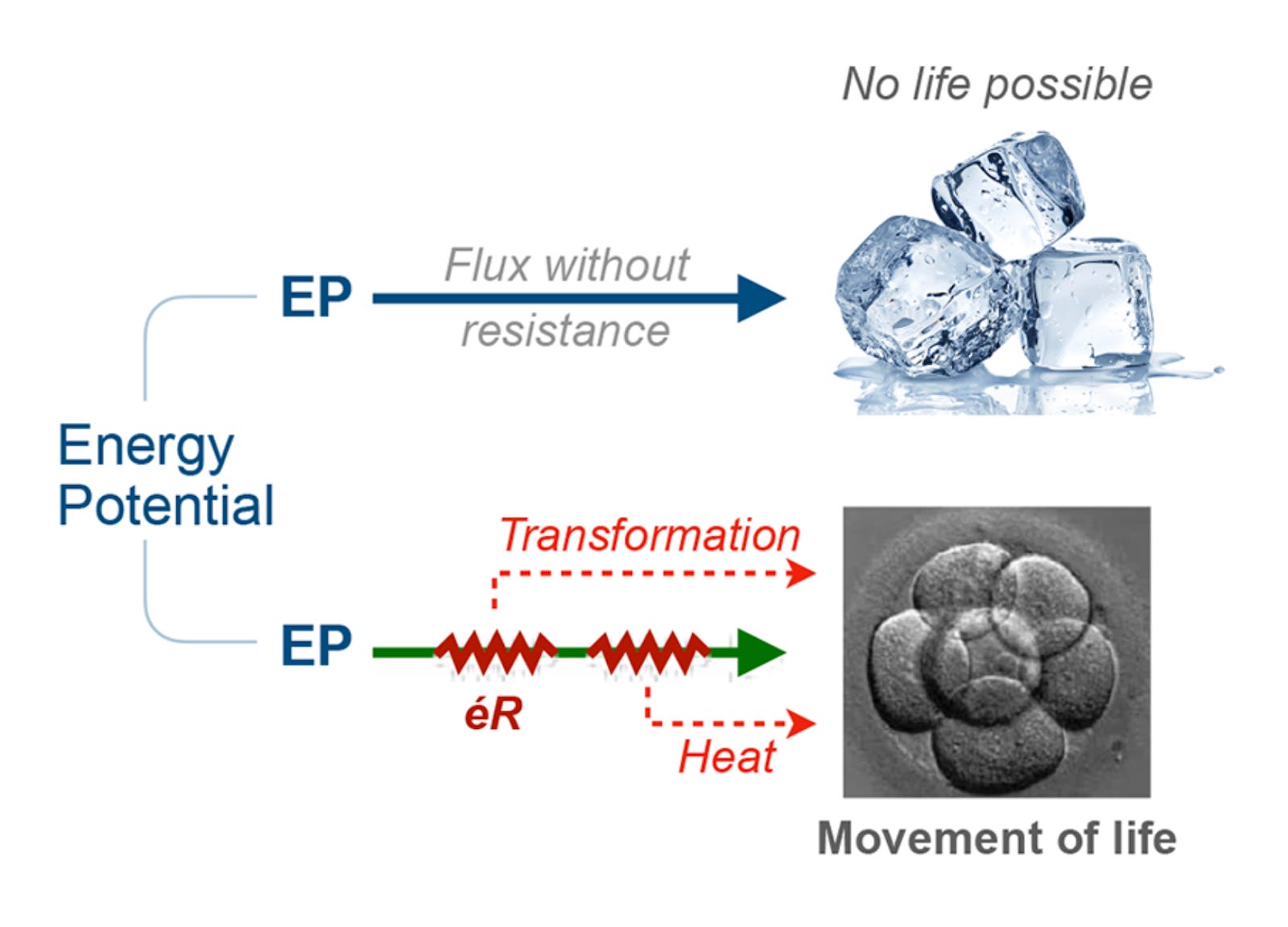
These secondary and tertiary ripples are rarely considered, but they accumulate. Over time, they form a hidden history of the cell’s energetic life—a ledger of how energy once flowed, where it met the most resistance, and what it left behind. It’s like how the circuitous path of a riverbed reflects the course of water over time. The flow of energy is the water rushing down the river, eroding and shaping the river’s bed, its contours, and its depth.

It’s those traces of the flow, or those dissipative losses, that we understand to be the basis of memory. And the basis of damage accumulation, aging, and our finite lifespans. We exist because energy flow shapes us. But we also die because we are malleable and shapable.
Our greatest gift is our greatest liability.
The Many Faces of Energy in Biology
What is energy, biologically?
Biological energy takes several recognizable forms. Chemically, it is stored in bonds and pairs of molecules that shuttle electrons through metabolic reactions.
Physically, it resides in membrane voltages and electrochemical gradients, most notably the gradient across the mitochondrial inner membrane created by pumping protons out of the mitochondrial matrix during electron transport.
Thermally, it is the restless jostling of molecules—the Brownian motion that rises as energy dissipates.
The body’s energy economy converts food into electrons that flow toward oxygen, generating ATP, heat, and a suite of high-energy intermediates that fuel synthesis, transport, signaling, and repair.
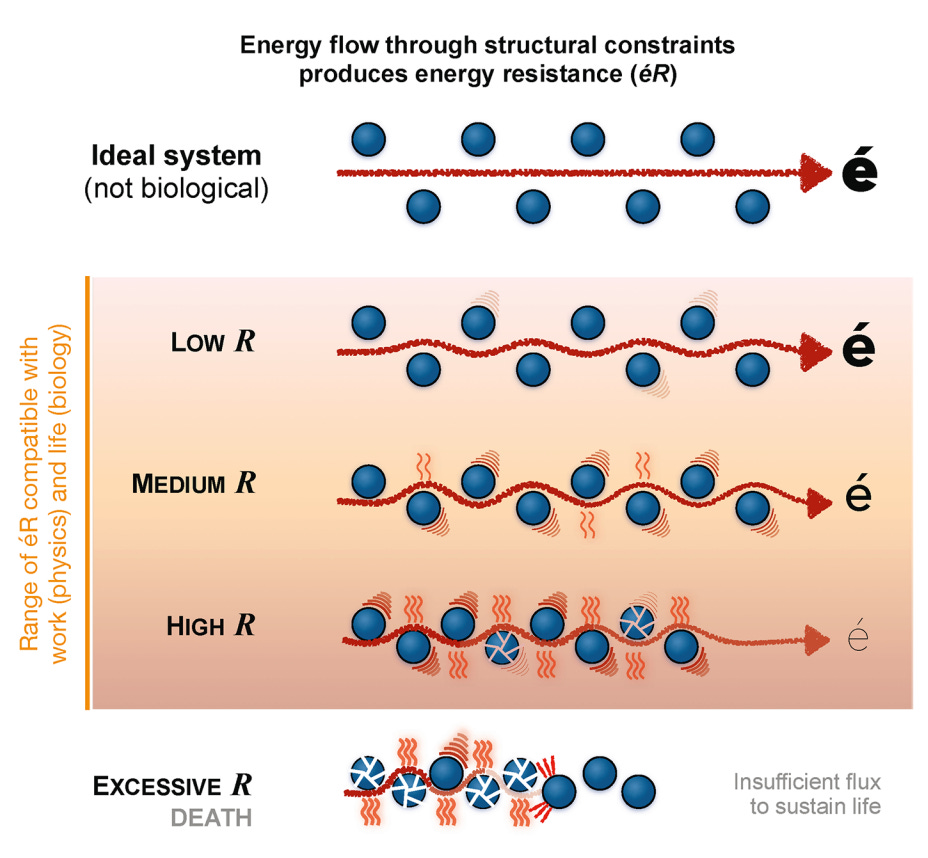
How easily energy flows, then, depends on infrastructure: the number and type of mitochondria, oxygen delivery, the removal of by-products, the availability of cofactors such as NAD⁺, enzyme turnover, substrate import, and tissue perfusion with oxygenated blood.
These factors make up the energetic circuitry of biology through which energy flows with non-zero resistance. These are the adjustable constraints—the biological equivalents of resistors—that determine how efficiently energy moves through the living system.
Bridging Physics & Biology to Understand Health
We currently have no method, yet, to reconstruct a full energetic history of a person. But what if we did? What if we could map not just molecular features using omics tools, but the patterned transformations of energy over time and space? We might finally uncover how early distresses accumulate into later disease, or why certain systems recover from stress while others collapse. We might see that disease isn’t a breakdown of parts, but a distortion—or the mispatterning—in the flow of energy through resistive networks.
It’s a physics problem, masquerading as a molecular one.
To get there, we must bridge disciplines. Physics and biology have long operated on different assumptions. They are two of the most prolific scientific disciplines—each responsible for some of humanity’s greatest advances: from quantum mechanics and relativity to genetics and molecular biology.
Physics has excelled at describing closed systems, where variables can be isolated, energy is conserved, and transformations are predictable. Biology, by contrast, deals with open systems—messy, adaptive, and context dependent. In biology outcomes are shaped by history and environment. Yet the body does not care about boundaries between disciplines; it obeys both sets of rules at once. We just need to understand them together.
Physics offers quantitative governing principles for how energy behaves: how it moves, transforms, and gives rise to structure. Biology, on the other hand, reveals how those same principles play out in matter that is alive.
Energy is the bridge between them. What physics describes in abstract quantities, biology embodies in cells, tissues, and behavior.
Every physiological process—metabolism, perception, movement, or repair—is a controlled transformation of energy governed by physical law. By tracing how energy flows through the body and where it meets resistance, we can translate the language of physics into physiology. This energetic bridge allows us to see health and disease not as separate biological categories, but as connected states of energy flow.
Uniting physics and biology under the framework of energy could yield a new science of life. This science could explain not only how we exist in the first place—how energy somehow congeals into life—but also how life accomplishes the “miraculous” feat of healing.
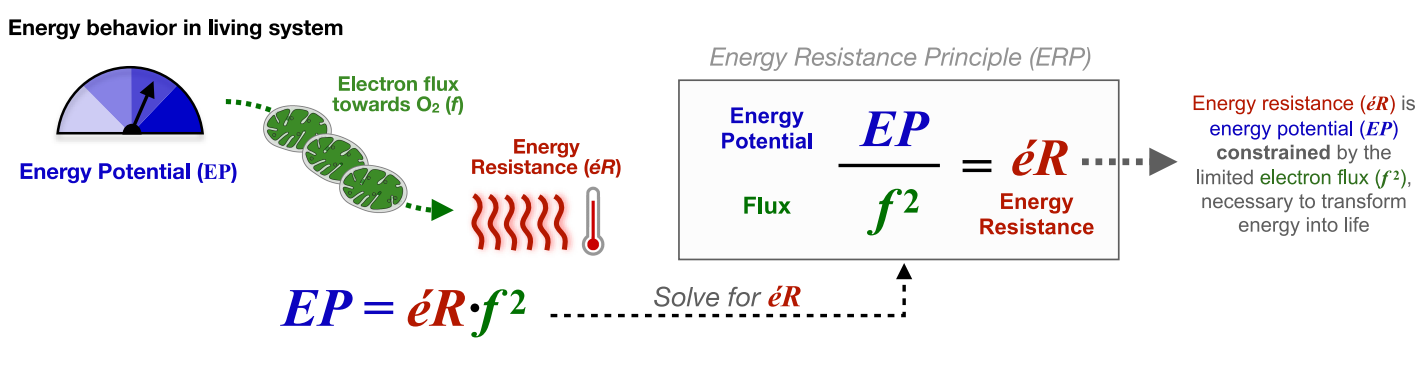
The Energy Resistance Principle (ERP) provides a framework that connects physics and physiology through the shared behavior of energy. It shows us how physical laws manifest in living systems.
The ERP starts with a simple truth: to be useful, energy must be transformed, and transformation requires resistance.
Resistance is the interface where energy is constrained into form.
What Does This Mean Inside My Body?
In biology, energy flows in many forms: electrons through the mitochondrial membrane, protons across electrochemical gradients, ions through gated channels, substrates through enzyme networks, and oxygen and nutrients through blood vessels. These are the body’s “wires.” They differ from copper wires in one key way: biological conduits are dynamic, adaptive, and alive.
Energy metabolism is the body’s energetic circuitry.
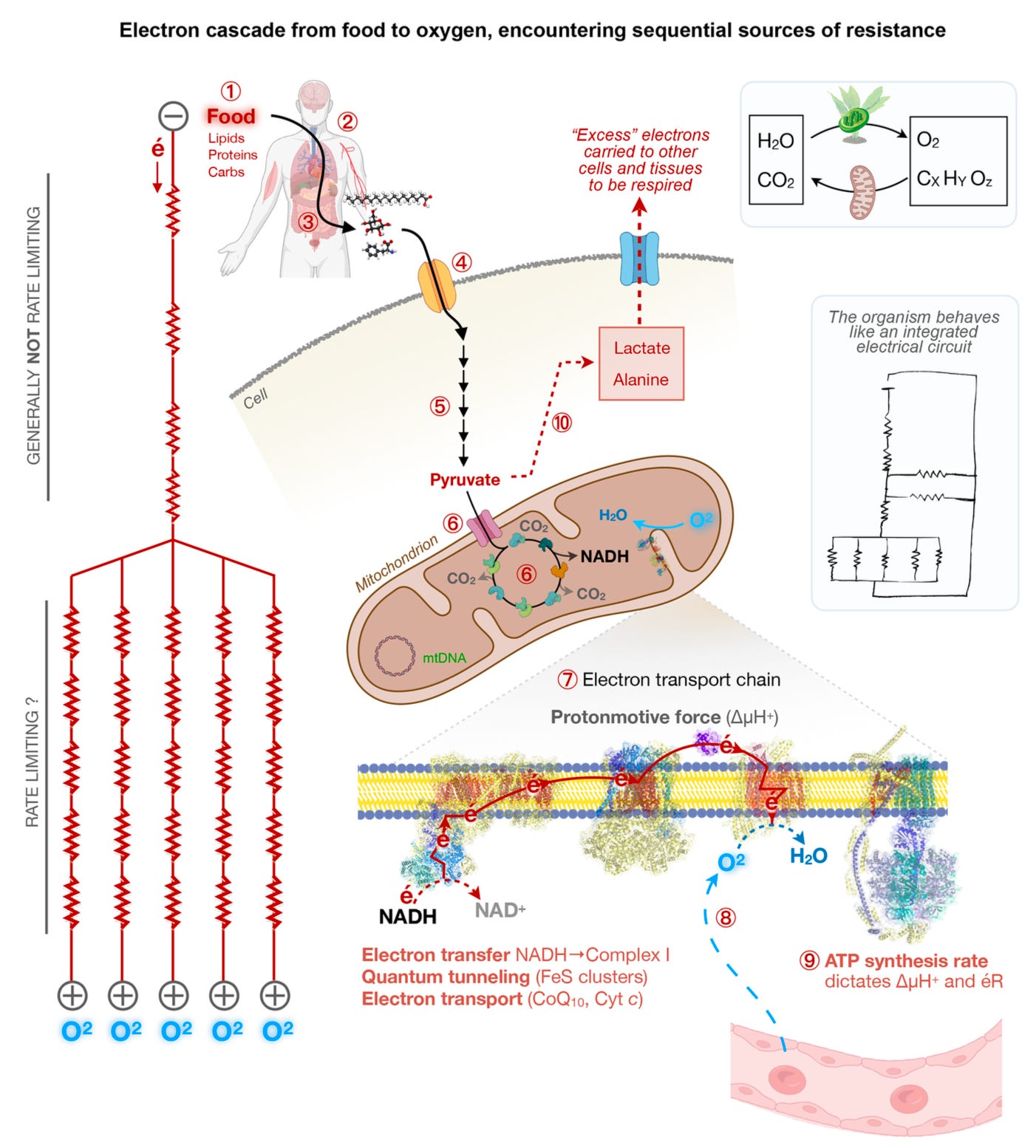
For example, axons conduct electrical impulses much like insulated cables, but they can change their conductivity by altering ion-channel density. Capillaries act as flexible pipelines, adjusting their diameter to regulate flow and pressure. The mitochonrial inner membrane channels electrons through protein complexes arranged in series, functioning as resistors that convert flow into usable energy.
Together, these biological “wires” not only conduct energy but continuously remodel themselves to balance flow and resistance in real time.
In electrical systems, resistance converts current into power, heat, or light. In living systems, the same principle underlies metabolism. Mitochondria resist the flow of electrons through the respiratory chain, using that constraint to convert chemical potential from food into ATP, heat, and the electrochemical gradients that power life.
It’s this regulated biological resistance that allows energy to be usefully transformed, rather than simply released and lost. The result is a living electrical network in constant motion. It conducts, resists, and transforms energy from the chemical potential of food into the physiological power that sustains life.
The same principle applies throughout different body systems:
Ion channels: slow down the flow of charge across neurons to shape the waveform of thought.
Vascular systems: regulate flow to tissues, resisting too much pressure to preserve vessel integrity.
Immune cells: ramp up metabolic resistance to inhibit viral replication.
Connective tissues: resist mechanical deformation to protect organs and anchor motion.
Resistance is a tunable property of every level of life, from molecules to minds. It shapes how energy moves and how systems respond.
In living systems, resistance converts energy potential into everything: motion, immune responses, tissue remodeling, perception, and even mood.
Why is this important? Because resistance can cause states that we associate with disease. Fatigue, inflammation, cognitive dullness, and appetite loss are not just symptoms. They are signatures of elevated biological resistance.
What Happens When Resistance Is Too High For Too Long?
When the system is under stress and when energy demand outpaces the capacity for transformation, resistance rises. It’s the body’s way of slowing down to protect itself. These resistive states can be adaptive, like post-exercise recovery or pregnancy-induced fatigue.
But when resistance persist chronically, it starts to look like illness.
Mechanistically, this begins in the mitochondria.
As local resistance rises, signals propagate through the body. Mitochondria release GDF15, a cytokine that communicates energetic distress to the brainstem. The brain, in turn, reduces appetite, movement, and motivation. These behaviors lower energy potential and help restore flow. Simultaneously, sympathetic and inflammatory networks activate, constricting blood vessels and altering immune metabolism to prioritize essential functions.
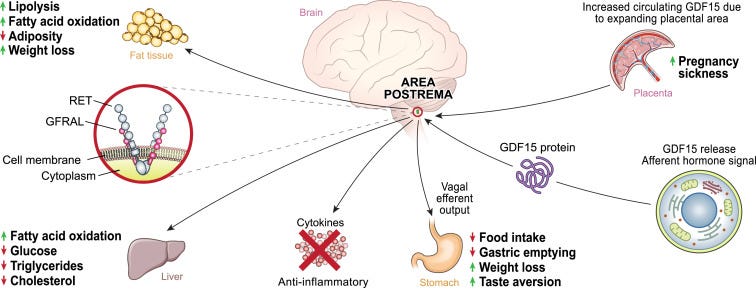
Localization within the brain & physiological effects of GDF-15. Source: Hale & Véniant, 2021
These coordinated responses recalibrate energy use, but when sustained, they become pathological. They can manifest as chronic fatigue, persistent inflammation, metabolic slowdown, or mood disturbance.
In essence, energy resistance emerges whenever the system’s infrastructure—mitochondrial flux capacity, oxygen delivery, enzymatic turnover, or redox balance—cannot meet energetic demand. Short-term resistance protects; long-term resistance degrades. The difference between recovery and disease lies in whether the system can lower its resistance once the stress has passed.
Population data backs this up. Elevated GDF15 levels are consistently associated with lower vitality, fatigue, frailty, and worse outcomes in cardiovascular and metabolic diseases.
GDF15 rises with mitochondrial stress. It rises with aging.
And crucially, it falls when the system recovers. It is one of the clearest windows we have into the body’s energetic state—not just how much energy is being used, but how easily it is flowing.
The ERP reframes this entire landscape. It gives us a way to measure, model, and eventually modulate how energy flows through a living system.
It says: to be alive is to transform energy. To transform energy, there must be resistance. And to stay well, that resistance must be finely tuned. The future of medicine may lie not in targeting molecules, but in understanding and restoring energy flow.
From Physics to Physiology: What Energy Resistance (éR) Looks Like in Real Life
Everything you do: waking up, thinking, digesting, healing, involves transforming energy through this resistive architecture.
For example, when you start running, your muscles demand more ATP, and your mitochondria ramp up the flow of electrons. For a brief moment, energy resistance spikes. You feel this as exertion. But with training, your mitochondria multiply, increasing your flow capacity. Your body adapts by reducing éR—making energy transformation easier next time. This is why regular exercise improves resilience, metabolic flexibility, and even mood.
Sleep, in contrast, decreases energy potential. Heart rate slows, metabolism drops, and energy demands are minimized. This lowers energy potential and thus lowers éR. That’s why deep sleep is restorative: it’s a physiological state of low energy resistance that enables repair, memory consolidation, and cellular regeneration.
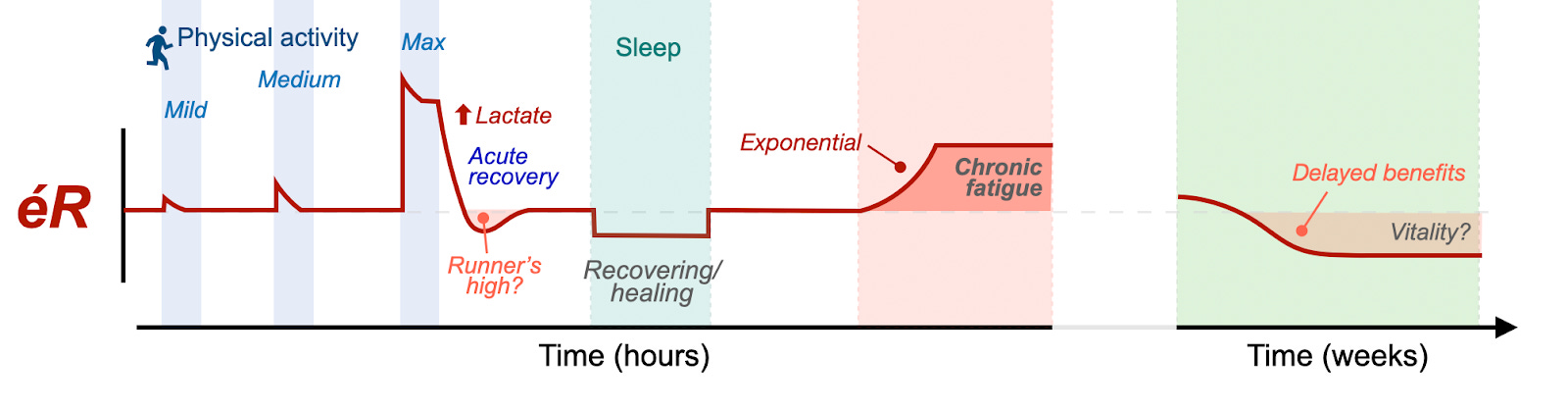
Over-eating (eating too much) does the opposite.
Consuming excessive food increases energy potential. When there is too much glucose and too many lipids, your mitochondria can’t keep up. The flow bottlenecks. Resistance rises. Electrons pile up, there is backflow onto oxygen, reactive oxygen species are generated, and cellular damage occurs. Chronic overeating, without a matching increase in flow capacity, leads to metabolic disease.
The same logic extends to mental states—we’ll go into more detail in an upcoming post.
Can we measure Energy Resistance (éR) ?
Until recently, these ideas were theoretical. But biomarkers like GDF15 now make it possible to measure energy resistance directly.
In a 2025 study analyzing over 52,000 individuals from the UK Biobank, elevated GDF15 was associated with more than 400 traits related to fatigue, inflammation, metabolic disease, pain, reduced physical activity, and poor self-rated health. It also correlated with markers of stress, suppressed growth signaling, and negative affect traits like neuroticism.
GDF15 now represents one of the most robust whole-body indicators of energetic distress and, potentially, a new clinical endpoint for interventions aimed at restoring energy flow.
The Takeaway & Where We Go From Here
Every breath you take, every bite you eat, every thought you think, is part of an energetic process But energy alone is not what keeps us alive: it’s the resistance to energy that allows transformation.
From mitochondria to the mind, resistance shapes function. Health is the ability to maintain energy transformation at low cost. Disease is a state in which that transformation becomes inefficient, distorted, or impossible.
If energy resistance is central to biological transformation, it may also become central to how we monitor and intervene in health. Quantifying resistance through markers like GDF15, or eventually real-time sensing, opens the possibility of tracking not just molecules, but the balance between energy supply and flow.
In practice, this could enable diagnostics that detect elevated energy resistance before symptoms appear, and allow continuous monitoring of physiological resilience during exercise, illness, or stress. Instead of relying on static lab values, we could assess the body’s energetic behavior as it unfolds.
At a systems level, ERP offers a way to model complex states such as fatigue, inflammation, or mood as measurable shifts in energy resistance. This reframes chronic illness and recovery as dynamic conditions shaped by context and energetic load.
Ultimately, ERP could guide the design of interventions—from diet to light-based or neurostimulation therapies—aimed at lowering resistance and restoring energy flow, and support integrated platforms that connect mitochondrial function, behavior, and metabolism into a unified view of health.
By treating energy resistance as a measurable biological variable, we begin to close the loop between physics, physiology, and perception. And in doing so, we gain a more complete picture of what it means to sustain life.
The ERP helps us think about life and understand ourselves energetically.
Curious what the structures that govern energy flow and resistance look like inside cells?
Visit MitoLife to explore the beautiful diversity of mitochondria.
It’s genuinely encouraging to see cellular energy supply gaining more attention.
For a long time, we’ve focused on markers and outcomes — but not enough on whether energy actually reaches the cell where it’s needed.
This shift feels important.
Good piece. I'll make a couple of comments, one experiential, the other more theoretic. First, as long-term endurance cyclist, I've used the mental framing of "homeostatic resistance" (HRE) as a way of thinking about the physical sensations of effort not "suffering" or "pain." It's simply the body telling me this is what is feels like to apply effort, when it prefers to conserve energy. With time, every athlete learns what levels of "resistance" feel like, but they're just that, feelings. The other point, is the resistance to energy flow in life, is the result of formation of persistent structure. Life requires structure or it dissipates, and it requires energy flow. I've come to think of the definition of life, over generations, as "a persistence pattern that captures and shapes flow of energy over time". That seems to me to be a better definition of life that most textbooks. This looks like a fruitful line of research. Good luck!